



Jute Drawstring Bags: A Truly Sustainable Choice

TL;DR
Jute drawstring bags are an exceptionally sustainable choice. Made from a natural, renewable, and fully biodegradable plant fiber, they have a low carbon footprint and decompose quickly. Choosing jute directly helps combat plastic pollution, making it a powerful eco-friendly option for everyday use.
The Core of Sustainability: Why Jute is an Eco-Friendly Champion
At the heart of the conversation about sustainable alternatives, jute stands out as a true champion. But what makes this natural fiber so environmentally friendly? The answer lies in its origin, its growth cycle, and its inherent properties. Jute is a long, soft, shiny bast fiber that can be spun into coarse, strong threads. It's derived from plants in the Corchorus genus, which thrive in the warm, humid climates of South Asia. Unlike synthetic materials derived from fossil fuels, jute is a renewable resource, harvested annually without depleting the planet's finite resources.
One of the most compelling aspects of jute's sustainability is its minimal environmental impact during cultivation. The jute plant is primarily rain-fed, meaning it requires very little irrigation compared to water-intensive crops like cotton. Furthermore, it grows rapidly, maturing in just four to six months, and typically needs minimal chemical fertilizers or pesticides to flourish. This low-input agriculture not only preserves local water sources but also maintains soil health. In fact, jute cultivation can even improve soil fertility by leaving behind organic matter after harvesting.
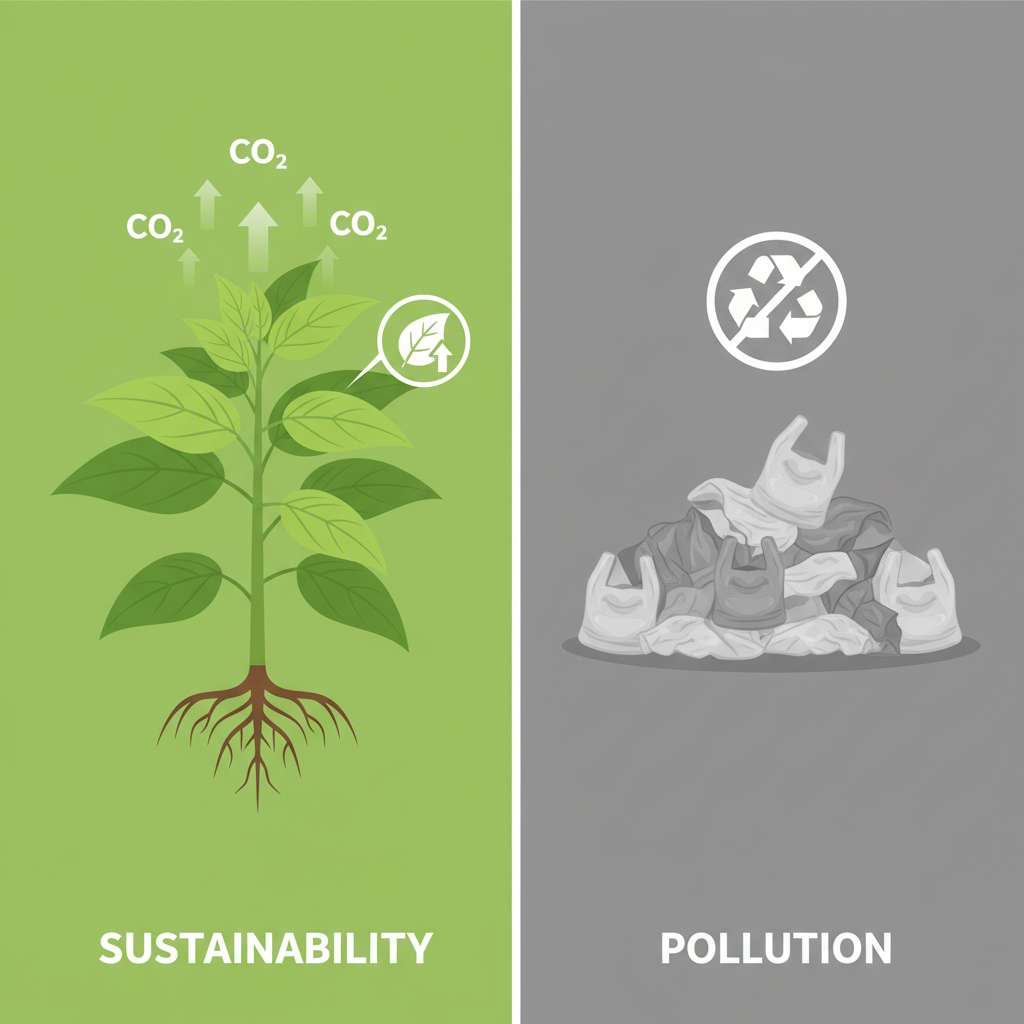
Beyond its renewable nature, jute is fully biodegradable and compostable. A jute bag will naturally decompose in about one to three years, returning nutrients to the earth without leaving behind harmful microplastics or toxic residues. This is a stark contrast to plastic bags, which can persist in the environment for hundreds of years, polluting oceans and harming wildlife. The production of jute also boasts a remarkably low carbon footprint. According to some reports, one hectare of jute plants can absorb up to 1.5 tons of carbon dioxide during its growth cycle, making it a carbon-negative crop.
When you place jute side-by-side with plastic, the environmental advantages become crystal clear. To better understand the differences, consider these key sustainability metrics:
Source Material: Jute comes from a renewable plant. Plastic is derived from non-renewable fossil fuels.
Biodegradability: Jute decomposes naturally and completely. Plastic breaks down into harmful microplastics and persists for centuries.
Carbon Footprint: Jute cultivation can be carbon-negative, absorbing more CO2 than it produces. Plastic production is an energy-intensive process that releases significant greenhouse gases.
Resource Use: Jute requires little water and few pesticides. Plastic production consumes significant energy and contributes to pollution.
A Balanced Perspective: The Pros and Cons of Jute Bags
While jute drawstring bags present a powerful case for sustainability, it's important to have a balanced view. Like any material, jute has a unique set of characteristics that result in both significant advantages and a few practical drawbacks. Understanding these trade-offs allows you to make a truly informed decision about when and how to use them effectively.
The primary benefits of jute bags are directly linked to their natural origins. They are exceptionally strong and durable, capable of carrying heavy loads without tearing, which makes them a reliable choice for everything from grocery shopping to daily errands. Their reusability means a single jute bag can replace hundreds of single-use plastic bags over its lifespan. Furthermore, the material is breathable, which can be beneficial for carrying produce. From a commercial standpoint, their natural, rustic appearance is highly appealing, and they are easily customizable. This combination of durability and natural aesthetic makes them a popular choice for businesses creating promotional items. For instance, suppliers like Bincai Import and Export Co., LTD specialize in creating custom-branded jute drawstring bags for companies looking to make a sustainable statement.
However, there are some disadvantages to consider. Jute is a natural fiber that readily absorbs moisture, which means it can weaken, mold, or mildew if it gets wet and isn't dried properly. This also makes jute bags difficult to clean; they are not suitable for machine washing and are prone to shrinkage. Spot cleaning with a damp cloth is the recommended method. Compared to synthetic alternatives, jute bags can also be heavier and may not be as resistant to wrinkles. For some specific uses, manufacturers apply a thin plastic lamination to improve water resistance, but this compromises the bag's biodegradability.
To provide a clear overview, here is a direct comparison of the primary advantages and disadvantages of using jute bags:
| Advantages of Jute Bags | Disadvantages of Jute Bags |
|---|---|
| Highly durable and strong | Absorbs moisture and can mildew |
| Eco-friendly, biodegradable, and renewable | Difficult to wash; prone to shrinkage |
| Reusable and long-lasting (can last for years) | Heavier than plastic or synthetic bags |
| Low carbon footprint in production | Not naturally wrinkle-resistant |
| Cost-effective in the long run | Can fade with prolonged sun exposure |
| Breathable and has a natural, stylish look | Laminated versions are not fully biodegradable |
The Full Lifecycle: From Low-Impact Plant to Reusable Bag
To fully appreciate the sustainability of a jute drawstring bag, it helps to look at its entire lifecycle—a journey that begins in a field and ends by returning to the earth. This circular path stands in stark contrast to the linear, wasteful model of single-use plastics. Each stage of the jute bag's life contributes to its overall low environmental impact.
The process follows a clear, sustainable path from start to finish. By understanding these stages, you can see how choosing jute is a vote for a healthier, more circular economy that values resources and minimizes waste.
Cultivation: The journey starts with the jute plant, which is grown primarily in India and Bangladesh. While often grown in rainy regions, it requires a significant amount of water and may need irrigation to thrive. Its rapid growth means it can be cultivated without excessive pesticides or fertilizers, though they are often used in commercial farming to increase yields and manage pests.
Harvesting and Processing: Once mature, the jute stalks are harvested, and the fibers are extracted through a natural process called retting, which uses water and microbes to break down the plant matter and separate the long, strong fibers. This traditional method is far less energy-intensive than the chemical processing required for many synthetic materials.
Manufacturing: The raw jute fibers are spun into strong threads, which are then woven into the durable fabric used to create drawstring bags. This manufacturing process has a lower carbon footprint compared to the production of plastic bags, which relies on the extraction and processing of fossil fuels.
Use Phase: This is where a jute bag truly shines. Thanks to its strength and durability, a single jute bag can be used hundreds, if not thousands, of times. Each use represents one less plastic bag being created, used for a few minutes, and then discarded to pollute the environment for centuries.
End-of-Life: When a jute bag finally reaches the end of its long and useful life, it does not become a permanent piece of waste. Because it is 100% biodegradable, it can be composted, where it will break down completely and return valuable organic matter to the soil, completing its natural cycle.
This lifecycle demonstrates a model of sustainable consumption. Unlike a plastic bag's journey from oil rig to landfill, the jute bag's path is regenerative. It supports sustainable agriculture, requires minimal processing, offers a long period of practical use, and ultimately enriches the environment upon its disposal. By choosing jute, you are supporting a system that works in harmony with nature, not against it.
Frequently Asked Questions
1. Is a jute bag environmentally friendly?
Yes, jute bags are extremely environmentally friendly. They are made from a natural plant fiber that is renewable, 100% biodegradable, and requires minimal water, pesticides, or fertilizers to grow. Their production has a low carbon footprint, and their use helps significantly reduce plastic pollution.
2. Is jute string eco-friendly?
Jute string, or twine, is just as eco-friendly as a jute bag. It is made from the same natural, sustainable, and biodegradable jute fibers. This makes it an excellent alternative to synthetic strings and ties for crafting, gardening, and packaging, as it will decompose naturally without harming the environment.
3. What are the disadvantages of jute bags?
The main disadvantages of jute bags include their tendency to absorb moisture, which can lead to mold or mildew if not kept dry. They are also difficult to wash, as machine washing can cause them to shrink or lose their shape. Additionally, they are generally heavier than plastic bags and can be prone to wrinkling.


 Send Email
 售前客服
售前客服 Skype
Skype WhatsApp