



Your Essential Pencil Pouch Checklist for School
TL;DR
A well-stocked pencil pouch should contain essential writing tools like pens and pencils, correction items such as an eraser and sharpener, and a basic ruler. Beyond these core supplies, the contents can be customized with tools for specific subjects like math or art. Your needs will naturally evolve as you advance from elementary to high school, so it's wise to adapt your pouch accordingly.
The Core Essentials: Must-Haves for Every Pencil Pouch
Before you start adding specialized gadgets, it's crucial to cover the fundamentals. These core essentials are the non-negotiable items that will get you through the majority of your daily tasks at school. Think of this as the foundation of a perfectly packed pencil pouch. According to guides from wikiHow and Listonic, these are the items you'll reach for most often for writing, correcting mistakes, and basic measurements.
The primary purpose of a pencil pouch is to have your writing instruments ready at a moment's notice. This means having a reliable pen (or several) and a couple of pencils. While a standard wooden pencil is a classic, many students prefer mechanical pencils because they don't require sharpening and offer a consistent line width. However, it's a good idea to carry spare lead. For pens, having blue, black, and red ink covers all your bases—general notes, official forms, and peer-editing or corrections.
Mistakes are a part of learning, which makes correction tools just as important as writing ones. A high-quality eraser that doesn't smudge is a must-have. If you're using traditional pencils, a small, durable pencil sharpener is essential; look for one with a container to catch shavings and prevent messes. For pen users, correction tape or a correction pen can be a lifesaver for keeping notes tidy and legible.
Finally, a few simple marking and measuring tools round out the essentials. A highlighter helps you emphasize key information in textbooks and notes, making study sessions more efficient. A small ruler (6-inch or 15-cm) is incredibly useful for drawing straight lines, underlining, and taking quick measurements without taking up too much space. These items form a complete, basic toolkit for academic success.
Essential Checklist:
Writing Tools: At least two pencils (mechanical or wood), blue and black pens, and one red pen.
Correction Tools: A good quality eraser, a pencil sharpener (with a case for shavings), and/or correction tape.
Marking & Measuring: At least one highlighter and a small ruler.
Beyond the Basics: Specialized Tools for Different Subjects
Once you have the essentials covered, it's time to think about the specific needs of your classes. Different subjects demand different tools, and customizing your pencil pouch can make a significant difference in your preparedness and organization. For example, what you need for a geometry class is vastly different from what you'll use in an art elective. Tailoring your supplies helps you avoid being caught without a necessary tool during a lesson or exam.
For mathematics and science courses, precision is key. A protractor is necessary for measuring angles in geometry, while a compass is essential for drawing circles and arcs. A scientific calculator is often a requirement for high school math and science classes, though it may be too large for some smaller pouches. Similarly, colored pencils or fine-tip markers can be invaluable for creating diagrams in biology or labeling charts in chemistry.
Creative subjects like art or design have their own set of requirements. This could include a set of colored pencils, markers, or even a few drawing pencils of varying hardness (e.g., 2H, HB, 2B). A small pair of safety scissors and a glue stick are also staples for projects, presentations, and crafts across many subjects. Keeping these specialized items organized is crucial to prevent your pouch from becoming a cluttered mess. Using a pouch with multiple compartments can help separate these tools from your daily essentials. For those looking for bulk or custom options, exploring custom mesh pencil pouches can provide a durable and organized solution for teams or schools.
| Subject | Recommended Tools |
|---|---|
| Mathematics | Protractor, compass, scientific calculator, graph paper clips. |
| Science | Colored pencils (for diagrams), small ruler, calculator. |
| Art & Design | Drawing pencils, colored pencils or markers, fine-tip black pen, glue stick, safety scissors. |
| Humanities/English | Multiple highlighters, sticky notes or page flags for annotating texts. |
Personal & Utility Items: The 'Just-in-Case' Supplies
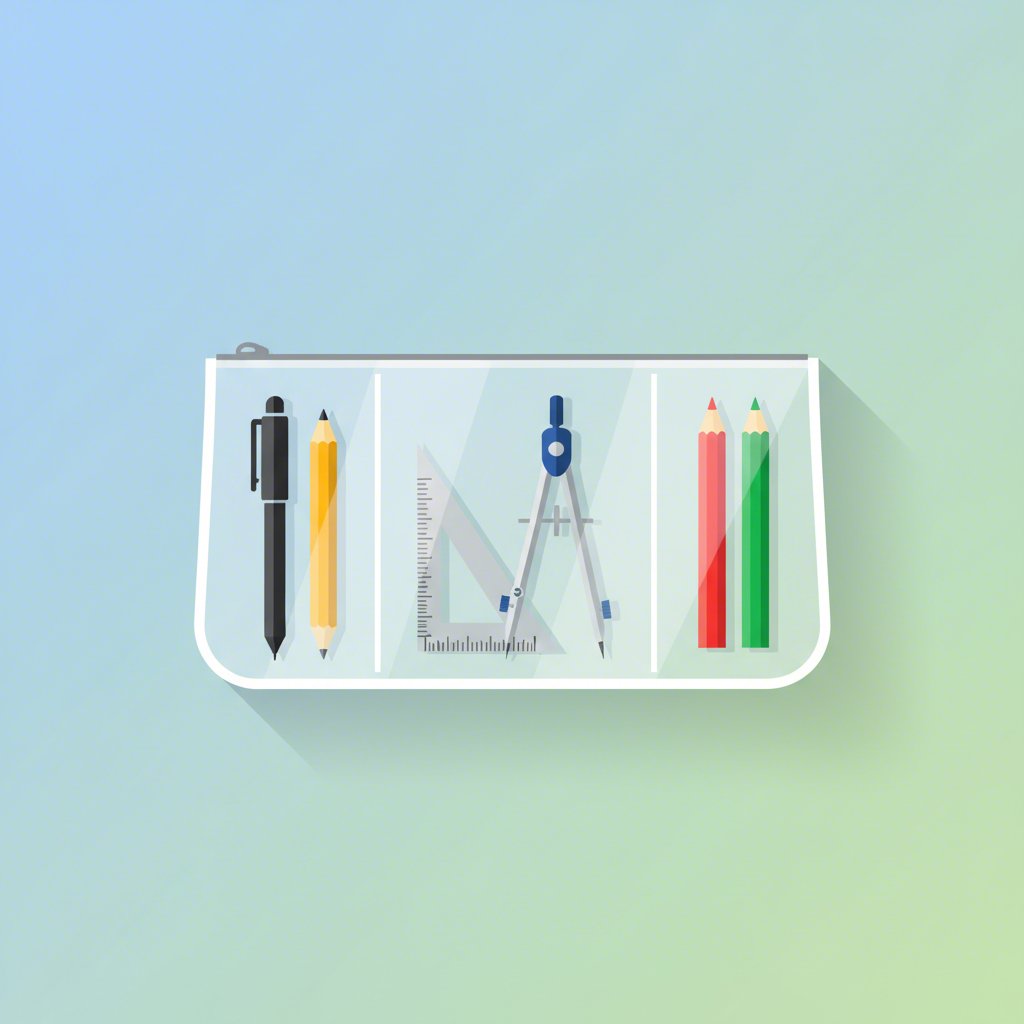
A truly great pencil pouch goes beyond just school supplies; it becomes a mini survival kit for your day. Including a few personal and utility items can save you from minor inconveniences and keep you focused on your work. These are the 'just-in-case' items that you'll be thankful to have when you unexpectedly need them. The key is to find a balance between being prepared and overloading your pouch with unnecessary bulk.
Organizational aids are a great place to start. Sticky notes or small page flags are perfect for jotting down quick reminders, marking pages in a textbook, or leaving a note for a friend. A few paper clips or a small binder clip can keep loose papers together. Some people even carry a USB flash drive for transferring files between school and home computers, which can be a real lifesaver if school networks are down.
Beyond academic utility, a few personal care items can make your day more comfortable. A small tube of lip balm, a few bandages for paper cuts, or even a travel-sized hand sanitizer can be incredibly useful. The trick is to find miniature or travel-sized versions of these items to conserve precious space. By thoughtfully adding a few of these extras, your pencil pouch transforms from a simple container for pens into a versatile toolkit that helps you handle whatever the school day throws at you.
Helpful Extras to Consider:
Organizational Tools: Sticky notes, page flags, paper clips, binder clips.
Tech: A small USB flash drive.
Personal Care: Bandages, lip balm, travel-sized hand sanitizer.
Miscellaneous: A small amount of cash for emergencies, a spare hair tie.
Age-Specific Checklists: From Elementary to High School
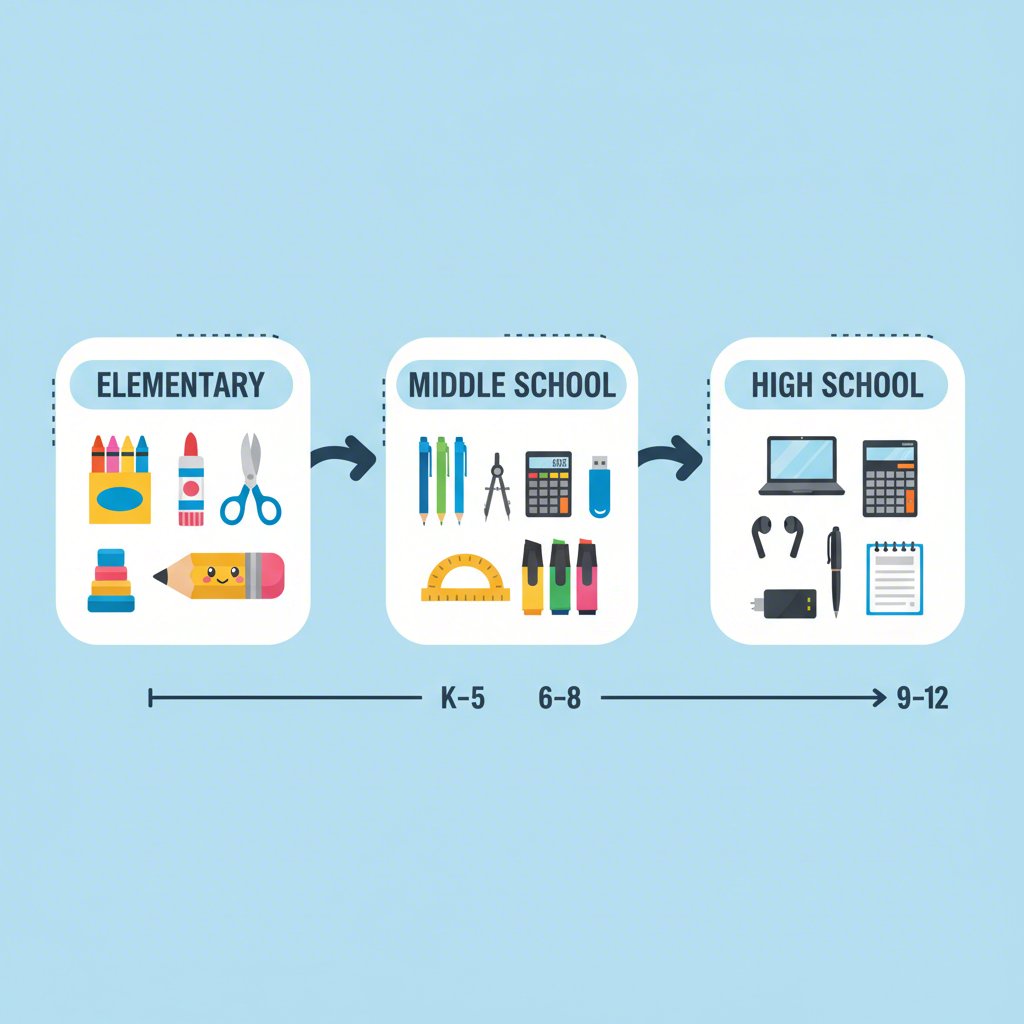
The contents of a pencil pouch should not be static; they need to evolve as a student progresses through their academic journey. The tools required for a first-grader are fundamentally different from those needed by a high school senior. Tailoring the pouch to the student's age and curriculum ensures they have exactly what they need to succeed without being weighed down by irrelevant supplies.
Elementary School (Grades K-5)
For younger students, the focus is on creativity, basic writing skills, and safety. Supplies should be durable, non-toxic, and easy for small hands to manage. The goal is to provide tools that encourage learning through hands-on activities.
Writing: Several #2 wood pencils (triangular shapes can help with grip).
Coloring: A small box of crayons (24-count), washable markers, and colored pencils.
Correction: A large pink eraser.
Tools: Blunt-tipped safety scissors and a non-toxic glue stick.
Other: A simple, durable pencil sharpener.
Middle School (Grades 6-8)
As students transition to middle school, their academic needs become more complex. The focus shifts from creative tools to supplies that support more advanced note-taking, organization, and subject-specific work like pre-algebra.
Writing: Mechanical pencils with spare lead, multiple pens (blue, black, red).
Correction: A good quality eraser and correction tape.
Marking: Several different colored highlighters.
Tools: A 6-inch ruler, a protractor, and a compass for math.
Organization: Sticky notes and page flags for studying.
High School (Grades 9-12)
High school students require a more streamlined and sophisticated set of tools. The emphasis is on efficiency, advanced coursework, and preparing for exams. The pouch becomes a more personalized and functional kit tailored to their specific class schedule.
Writing: High-quality pens (gel or rollerball for smooth notes), mechanical pencils.
Marking: A system of highlighters or colored pens for color-coding notes.
Tools: A scientific or graphing calculator (may be kept separately), a ruler, and any other required math tools.
Tech: A USB flash drive for digital assignments.
Study Aids: Index cards or sticky notes for quick revision.
Frequently Asked Questions
1. What are the absolute basics that should be in every pencil pouch?
Every pencil pouch, regardless of grade level, should contain the essentials for writing and correcting. This includes at least two pencils, a pen with blue or black ink, a reliable eraser, and a small pencil sharpener. A small ruler and a highlighter are also considered fundamental for most school tasks.
2. What does a year 7 (middle school) student need in their pencil case?
A Year 7 student is typically in the first year of middle school or secondary school. Their pencil case should be equipped for a wider range of subjects. Key items include multiple pens (black, blue, red), pencils, an eraser, a sharpener, a 15cm ruler, a highlighter, colored pencils, a protractor, and a pair of compasses for math classes.
3. How can I organize my pencil pouch effectively?
To keep your pencil pouch organized, start by choosing a case with compartments or separate sections. Group similar items together—pens with pens, math tools together, etc. Periodically, about once a month, empty your pouch to remove anything you don't use, get rid of broken items, and restock essentials like lead or ink. Avoid overstuffing your pouch; only carry what you truly need for the day.


 Send Email
 售前客服
售前客服 Skype
Skype WhatsApp