
How We Guarantee Consistent Bag Quality: A Transparent Look at Our QC Process
By Bincai Import and Export Team | Updated: September 16, 2026
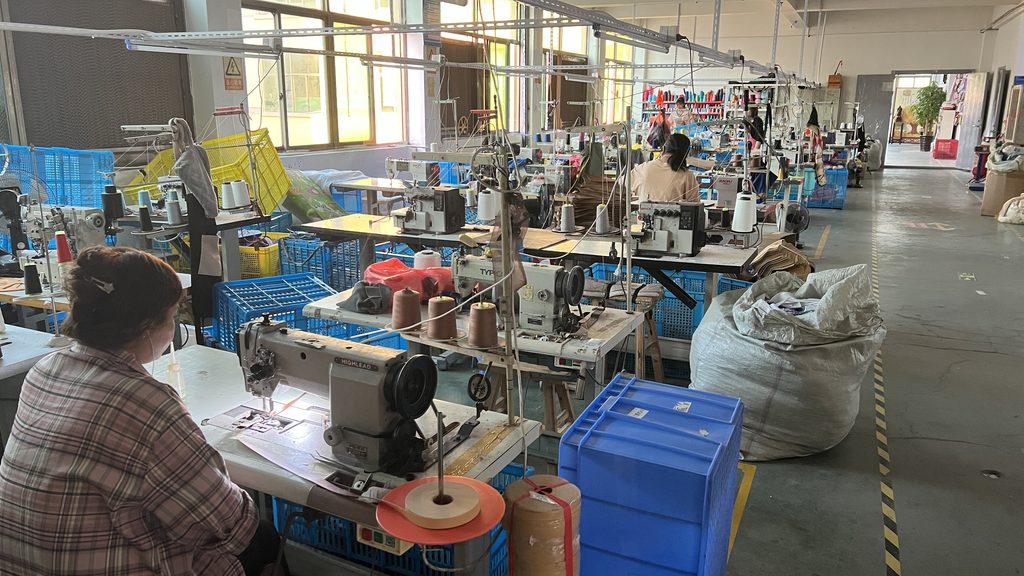
For brand owners and wholesale buyers, inconsistent bag quality is a silent brand killer. Batch-to-batch color deviation, uneven stitching, faulty hardware, and flawed printing frequently lead to product returns, negative reviews, and eroded brand credibility. At Bincai, quality control goes far beyond a simple final-stage check. As a 15+ year professional custom bag manufacturer exporting to 50+ countries, we operate a transparent full-cycle QC system spanning material sourcing, pre-production sampling, in-line manufacturing and pre-shipment verification. This guide reveals our standardized quality-control workflow to help global buyers mitigate quality risks and achieve reliable results for bulk orders.
Quality Control at a Glance: 5-Stage Full-Cycle QC System
We follow a complete five-stage quality-control mechanism covering the whole production lifecycle, adhering to international textile inspection standards and third-party audit requirements to prevent defective goods from mixing into bulk shipments.
| Stage | What We Check | When | Outcome |
|---|---|---|---|
| Specification Alignment | SPI (stitches per inch), fabric grade, hardware accessories, precise dimensions, Pantone color codes | Before sampling and mass production | Confirmed technical benchmark for all production batches |
| Sample Approval | Stitching uniformity, color matching, logo position and clarity, overall workmanship | Pre-production | Signed pre-production sample as official production standard |
| In-Process Control | Cutting accuracy, seam allowance, component alignment, printing and embroidery stability | During sewing and assembly | Early defect detection to avoid large-batch losses |
| Final Inspection | Functional durability, aesthetic consistency, surface cleanliness, detail finishing | Before formal packing | Retail-grade qualified finished goods |
| Pre-Shipment Verification | Packaging standard, label accuracy, carton firmness, quantity counting | Before container dispatch | Full photo and video confirmation before delivery |
Phase 1: Specification Alignment & Sample Confirmation — The Root of Stable Quality
Most cross-border quality disputes stem from poorly defined pre-production specifications. We focus on aligning expectations upfront to remove ambiguous standards before manufacturing starts.
- SPI (Stitches Per Inch) standardization: Different global markets apply different stitching-density requirements. We tailor SPI settings according to your target-market industrial norms to balance bag durability and premium visual quality. All stitching parameters are documented for production teams to prevent arbitrary worker adjustments.
- Signed sample as production benchmark: Our pre-production sample acts as the sole quality reference for bulk production. Once confirmed, materials, stitching techniques, logo craftsmanship and color tones are locked in place. Any changes require written client approval to preserve batch-to-batch consistency for repeat orders.
Before working with any overseas supplier, factory qualification checks are highly recommended. See our complete guide: how to verify a reliable custom bag manufacturer in China.
Phase 2: Professional In-Process QC — Following International SGS Inspection Standards
Unlike many factories that only run end-of-line checks, we maintain ongoing in-line monitoring following SGS international inspection protocols, including IPC (Initial Production Check) and DUPRO (During Production Check), two key mechanisms for real-time quality control.
- Precision cutting control: All cutting dies are custom-made from the approved sample. Fabric laying and pattern alignment are closely inspected to keep component sizes uniform across every bag and minimize manual error and material waste.
- Standardized sewing and assembly: Operators perform self-inspection after each step, while dedicated supervisors carry out random spot-checks. We follow the widely-accepted 1 cm industry tolerance for sewn bags, reconciling practical production limits with product uniformity. Zippers, straps and hardware go through repeated functional testing to guarantee smooth operation.
- 100% in-house production without subcontracting: With our own cutting, printing and sewing workshops, we do not outsource manufacturing work. This eliminates quality fluctuations caused by third-party subcontractors and sustains consistent output even for orders of 5,000+ pieces.
To learn the full manufacturing workflow paired with our QC regime, visit our custom bag production process guide.
Phase 3: Final Inspection & Third-Party Audit Support — Meet Global Brand Standards
Once production finishes, we conduct comprehensive final checks based on FRI (Final Random Inspection) international sampling standards to satisfy requirements from global brands and importers.
- Multi-dimensional functional and aesthetic inspection: We test zipper flexibility, strap load-bearing performance and overall structural stability. Finished bags are reviewed under standard lighting for consistent color judgement; loose threads, stains and cosmetic defects are removed.
- Scientific defect handling mechanism: Minor defective items go through rework where feasible; irreparable units are logged and scrapped. Defective goods never enter finished packaging to safeguard your brand reputation.
- Full support for international third-party verification:
- SGS & BV independent inspection: We fully accommodate on-site inspections by SGS and Bureau Veritas. Our factory grants free site access and shares production data, helping mid-to-high-volume buyers obtain authoritative independent QC reports.
- Global social and sustainability certification compliance: Our factory stays audit-ready for amfori BSCI and Sedex to meet international social-responsibility benchmarks. For eco-conscious orders, we follow the latest Textile Exchange Materials Matter Standard plus GRS recycled-material specifications, and can supply batch traceability documents for GRS / FSC-certified goods.
How Material Selection Determines Finished Bag Quality
Skilled workmanship cannot offset poor-grade raw materials. Incoming fabric, faux-leather and accessories are cross-checked against the approved sample before cutting starts. We source suitable materials including canvas, 600D Oxford, PU leather and recycled RPET fabric tailored to each customer’s use-case for better durability, color fastness and texture.
Deep-dive fabric choices in our custom bag materials guide. View real-world product examples: custom cosmetic and makeup bags and custom tote bags and promotional bags.
Frequently Asked Questions
What does AQL mean in custom bag quality control?
AQL (Acceptable Quality Limit) is a globally-adopted statistical sampling standard for textile and sewn-goods industries. For custom-bag bulk production, we follow AQL 2.5 for major defects — the most widely-recognized benchmark in international bag manufacturing, balancing acceptable quality levels and production efficiency.
Do you support third-party factory inspections and on-site QC checks?
Yes. We cooperate fully with SGS, BV and other reputable third-party inspection bodies. We provide free factory access, production records and sample reference files. Under typical international-trade terms, inspection fees are paid by the buyer; our team offers end-to-end coordination free of charge.
What industry certifications can your factory support?
Our factory is audit-ready for BSCI, Sedex, GRS, and FSC certifications. We have a track-record of passing audits for global-brand orders. For recycled-material projects, we can deliver full GRS batch traceability documents and align with the 2026 Textile Exchange Materials Matter Standard transition requirements.
What is the standard size tolerance for custom sewn bags?
A tolerance within 1 cm is the generally-accepted global standard for custom sewn bags. Small reasonable deviations do not impair function or appearance and are considered normal within mass production.
How do you handle defective products during bulk production?
We manage defects by category: minor faulty items get reworked and re-inspected; non-repairable units are logged, isolated and scrapped. Defective items are strictly kept out of finished packaging and shipments to secure qualified deliveries for clients.
How do you guarantee consistent quality for repeat bulk orders?
We create dedicated order files for long-term partners, locking-in fabric suppliers, stitching settings, Pantone color codes and logo specifications. Repeat orders skip redundant debugging steps for stable batch-to-batch quality and resolve the common industry pain-point of inconsistent quality between new and repeat runs.
Conclusion: Stable Quality Is Our Core Competitive Advantage
Consistent custom-bag quality does not happen by chance. It comes from standardized workflows, rigorous multi-stage QC, in-house manufacturing and experienced management. As a transparent direct factory with 15-year export history, we reduce middleman risks and subcontracting-related quality volatility, protecting your brand reputation for wholesale, OEM and private-label long-term cooperation.
Explore our product portfolio to see results from our quality-control system: wholesale custom bags and totes.
Ready to Build a Quality-Driven Partnership?
Contact us with your project details. Discuss your requirements with us upfront — from stitch density and size tolerance to sustainability certifications and third-party inspection needs. We deliver transparent quotes, free sample development and well-defined QC solutions.
📱 Discuss Your QC Requirements: +86 15857935670
📧 Request Our QC Documentation & Inspection Checklist: info@bincai-intl.com
Related reading: Learn how to verify a reliable custom bag manufacturer, review the full custom bag production workflow, understand MOQ negotiation tips, and master fabric selection via our bag fabric selection guide before placing bulk orders.