
Your First Custom Bag Order: 10 Checkpoints to Avoid Costly Mistakes
By Bincai Import and Export Team | Updated: October 12, 2026
Your first custom bag order is exciting, yet it carries hidden sourcing risks. More than just purchasing a product, you are selecting a supply chain partner. Bad decisions may blow your budget, delay shipments, and hurt your brand reputation. This factory-written guide from our 15-year custom bag manufacturing team outlines 10 critical checkpoints to help you place orders confidently.
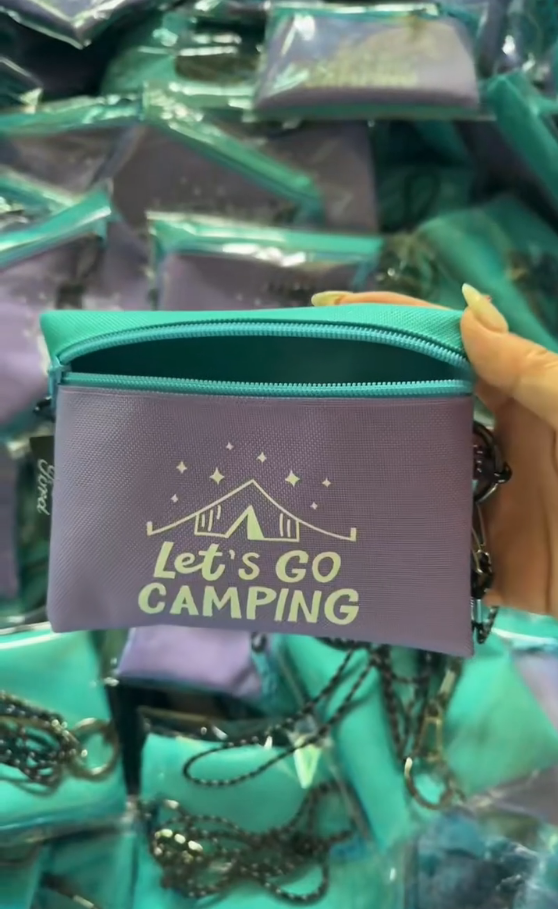
Quick Reference: The 10 Checkpoints
| # | Checkpoint | Primary Risk |
|---|---|---|
| 1 | Understand the true cost of a low price | Material substitution, quality failure |
| 2 | Design file “producibility” review | Costly revisions, delays |
| 3 | Treat sampling as an investment | Undetected design issues |
| 4 | Approve a pre-production sample | Bulk differs from approved sample |
| 5 | Define acceptable color tolerance | Disputes over shade differences |
| 6 | Physically seal hardware samples | Inconsistent zippers, buckles & hardware |
| 7 | Agree on AQL quality acceptance standard | Mismatched definitions of “defect” |
| 8 | Confirm packaging specifications in detail | In-store or transit product damage |
| 9 | Build buffer time into your timeline | Missed sales & delivery window |
| 10 | Set clear communication channels | Misplaced or lost information |
Checkpoint 1: Understand the True Cost of a “Low Price”
In manufacturing, cost is physics, not magic. Fabric, zippers, labor, and overhead all have hard minimum costs. Factories operating on razor-thin margins are forced to substitute materials, shift work to less-regulated workshops, and cut corners on workmanship. The finished bags often fail, harming your brand and customer loyalty.
The factory reality: A sustainable price supports premium raw materials, skilled workers, and strict QC. When you find a factory delivering consistent quality and service, protect that partnership. Pressuring suppliers to operate at a loss will eventually backfire on you.
Checkpoint 2: Design File “Producibility” Review
Risk: Non-manufacturable designs lead to expensive revisions and shipment delays.
Our advice: Submit final artwork in AI, PDF, or high-resolution image formats. We review dimensions, color separation, and printing or embroidery feasibility early, and suggest practical adjustments before sampling to save your time and budget. For a full breakdown of the production workflow, visit our custom bag production workflow.
Checkpoint 3: See Sampling as a Value Investment
Risk: Skipping sampling to save a small fee creates costly surprises in mass production.
Our experience: A well-made sample catches most design and manufacturing flaws before bulk production. We build samples strictly to your specs to act as the physical benchmark for mass production. Standard sampling takes 3–7 working days and usually costs around USD 45. If your bulk order reaches 5,000 pieces or more, the sample fee will be deducted from your bulk invoice.
Checkpoint 4: Approve a “Pre-Production Sample”
Risk: Mass-produced goods do not match the sample you approved.
Our process:
- For new designs: A prototype verifies if the concept can be manufactured.
- Before bulk starts: A pre-production sample made with actual bulk materials must receive your formal approval. This prevents batch variation disputes, such as the common 3% fabric shade tolerance standard in the bag industry.
Key takeaway: Never approve a prototype sample to govern bulk manufacturing.
Checkpoint 5: Define “Acceptable” Color Tolerance
Risk: Arguments over minor color differences once bulk goods are finished.
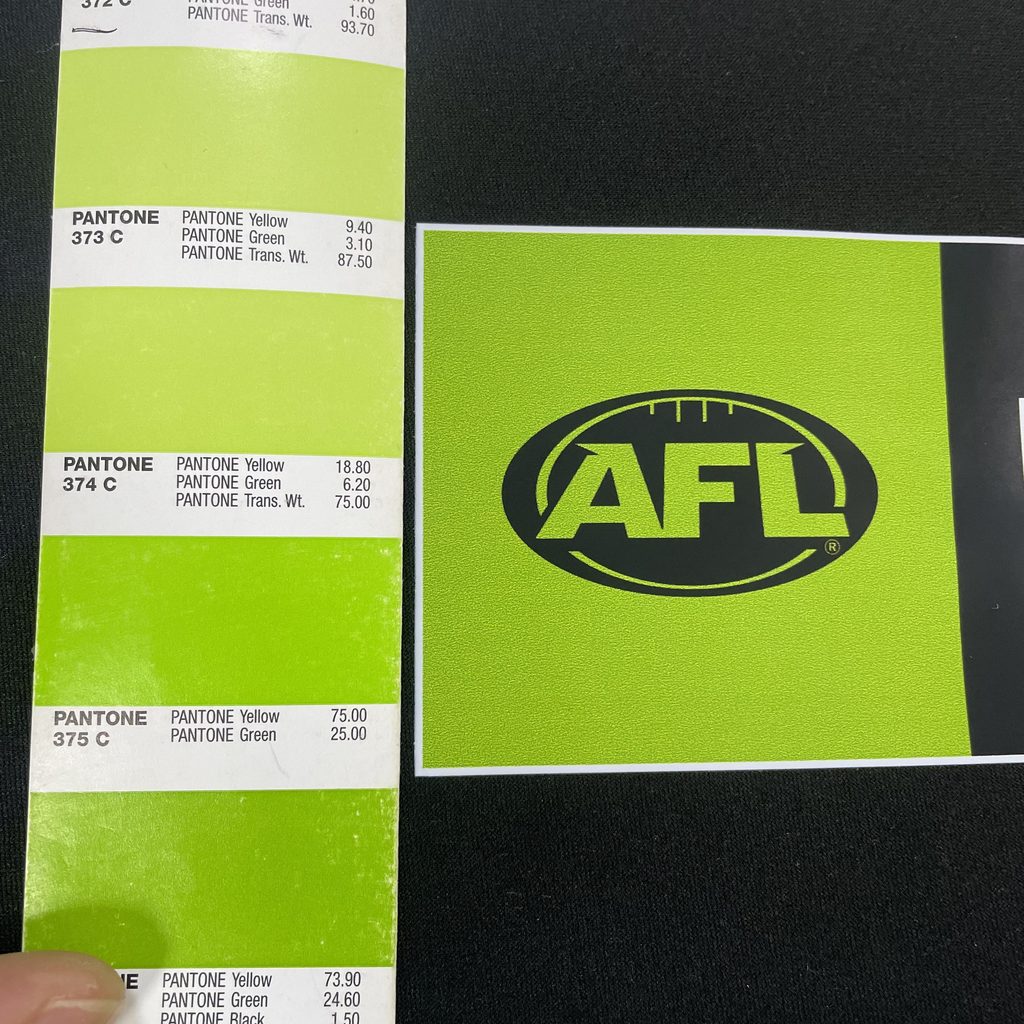
Industry fact: A small shade deviation between fabric lots (up to 3%) is normal. Best practice is locking your color standard upfront using Pantone swatches or physical fabric samples, and confirming fabric swatches before cutting starts. Pantone color guides are the global standard for custom bag color matching.
Checkpoint 6: Physically “Seal” All Hardware Samples
Risk: Zippers, buckles, and metal hardware arriving with inconsistent quality.
Our procedure: We create a sealed, signed physical hardware sample set (with photos for records) to serve as the binding quality benchmark and stop component substitutions. For a detailed breakdown of hardware choices and budgeting, read our custom bag hardware guide.
Checkpoint 7: Agree on a Quality Acceptance Standard (AQL)
Risk: Buyer and factory disagree on what counts as a defective bag.
Our solution: Write your AQL (Acceptable Quality Limit) clearly in your contract. The American Society for Quality defines AQL as the maximum percentage of defects acceptable within an inspection batch. Read more about AQL on ASQ’s official site. Common standards vary by market:
- Promotional bags (North America, Europe, Korea): AQL 2.5–4.0 is typical
- High-spec markets (such as Japan): AQL 1.0–1.5 requiring stricter workmanship and higher cost
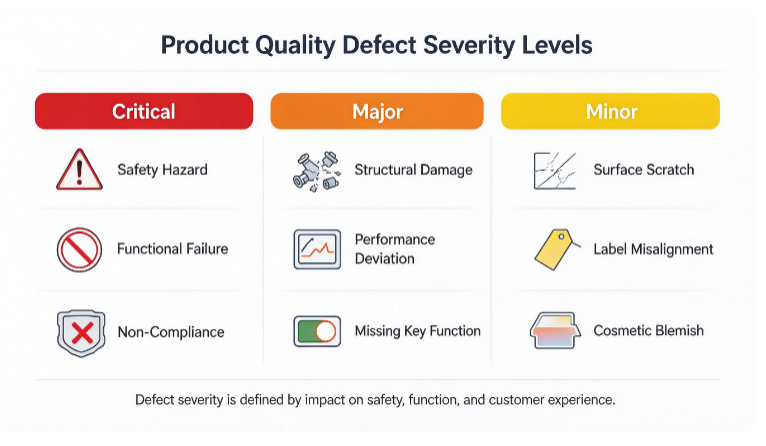
Bag defects fall into three categories for inspection:
| Defect Grade | Custom Bag Examples | Typical AQL |
|---|---|---|
| Critical | Broken hardware, sharp edges, toxic fabric | 0 |
| Major | Misprinted logo, faulty zipper, uneven long stitching | 1.0–2.5 |
| Minor | Tiny loose thread, faint light stain | 4.0 |
Always communicate your market requirements upfront. For more details on inspection workflows, read our quality control process guide.
Optional: Third-Party Pre-Shipment Inspection
Many first-time buyers hire independent inspectors such as SGS or Intertek for pre-shipment audits. Inspectors visit the factory, randomly pull cartons, and verify against your AQL rules and sealed samples.
Checkpoint 8: Confirm Packaging Details Precisely
Risk: Improper packaging causes damage during transit or retail display.
Our reminder: Approve every packaging layer: OPP polybags, printed insert cards, inner boxes, and export master cartons. Specify corrugated ply count and burst strength. We have seen customers incur unexpected rework costs because carton strength was not defined before mass production.
Checkpoint 9: Build Buffer Time Into Your Schedule
Risk: Production delays make you miss sales or delivery deadlines.
Our experience: Always reserve 1–2 weeks of buffer time for production and shipping. Avoid scheduling tight deadlines right before Chinese New Year, when labor shortages commonly extend lead times.
| Stage | Typical Timeline | Notes |
|---|---|---|
| Prototype / pre-production sample | 3–7 working days | Depends on hardware and fabric stock |
| Bulk production | 20–40 working days | Lead times lengthen near Chinese New Year |
| Pre-shipment inspection & packing | 2–4 working days | Necessary if a third-party audit is booked |
| Buffer time | 7–14 days | Strongly recommended for new buyers |
Checkpoint 10: Establish Clear Communication Channels
Risk: Miscommunication and lost specs with multiple contact persons.
Our recommendation: Assign one dedicated contact on each side. Use email for all final confirmations (designs, samples, PO revisions, specs). Do not rely only on instant messaging for binding instructions.
Must-Have Contract & PO Documentation Checklist
Add these clauses to your purchase order to eliminate disputes:
- Full product specification sheet (dimensions, fabric, hardware, printing method)
- Signed sealed sample photos + tracking number of physical sealed sample
- Agreed AQL standard and defect classification
- Color tolerance standard with Pantone reference
- Full packaging & export carton specifications
- Lead time and late delivery penalty terms (by mutual agreement)
Free Download: First Order Sourcing Checklist
Get our printable PDF checklist covering every item above. Use it as a template when preparing your first purchase order. Email us to request the PDF.
Real Project Example: From First Order to Repeat Supplier Partnership
A European promotional distributor placed their first order with us for 10,000 custom makeup bags made from 600D Oxford fabric. This project included:
- Sampling phase: 5 working days, with two rounds of revisions for zipper placement and screen-printed logo positioning.
- Color control: Pantone match confirmed against physical fabric swatch; final bulk shade deviation measured within 2% tolerance.
- Production: Bulk goods shipped within 22 working days.
- Result: The client reordered three times in the following 12 months, always referencing the same sealed sample as quality benchmark.
This is what a successful first order looks like: documented specs, sealed sample approval, and stable quality across repeat orders.
The Ultimate Checkpoint: Find a Responsible, Knowledgeable Partner
All of these checkpoints depend on people. Your most valuable asset is a supplier who understands your market and product and works with you to solve problems.
China’s manufacturing landscape is vast, and reliable, transparent factories that share both wins and setbacks are rare. Be cautious of suppliers who say “no problem” to every request without discussing risks. Professional manufacturers flag issues early and propose practical fixes.
If you are new to sourcing from China and find a factory that communicates openly, guides you through these checkpoints, and prioritizes long-term value — nurture that partnership. It delivers more value than chasing the lowest one-time price. For supplier vetting guidance, read how to verify a trustworthy custom bag manufacturer in China. For fabric options, check our custom bag material selection guide. Browse finished items on our wholesale tote & bag product page. If you are sourcing branded gifts, read our corporate gifting article: The Corporate Gifting Playbook.
Frequently Asked Questions
What is the biggest mistake first-time buyers make?
Focusing only on price. Chasing the cheapest quote often leads to material substitution, poor quality, and shipment delays. Sustainable pricing supports skilled labor and proper quality checks.
Do I need to approve a pre-production sample?
Yes. A pre-production sample made from actual bulk materials is mandatory. It prevents batch variation disputes and ensures mass production matches your expectation. Never use prototype samples as the bulk quality benchmark.
What payment terms are standard for custom bag orders?
Typical structures: orders under USD 1,500 usually require full prepayment; medium orders commonly use 50% deposit, balance before shipment; larger orders can negotiate 30% deposit and 70% balance before shipment, subject to negotiation with your factory.
How much buffer time should I add to my production timeline?
Add at least 1–2 weeks buffer to your production and shipping timeline. Avoid tight deadlines before Chinese New Year, when labor shortages can extend lead times. Start sourcing 6–8 weeks earlier if your delivery date falls near this holiday.
Can I negotiate MOQ on my first custom bag order?
MOQ flexibility depends on fabric and hardware stock. Talk through your target quantity at the very beginning of discussions. Read our full guide to learn how to negotiate MOQ with Chinese bag manufacturers.
Should I book a third-party inspector for bulk custom bag orders?
Third-party inspection is optional but highly recommended for high-value bulk orders. Independent auditors like SGS check finished goods against your AQL rules and sealed samples before shipment, lowering your risk of receiving non-compliant goods.
What documents should I prepare before contacting a custom bag manufacturer?
Prepare product dimensions, artwork or logo files, fabric and hardware requirements, target quantity, color reference (Pantone or physical swatch), packaging specs, and your target delivery date. Having these ready speeds up quotation and sampling dramatically.
Ready for a Transparent, Low-Risk First Custom Bag Order?
We built this checklist from real factory experience. We focus on long-term partnerships, not one-off transactions. Share your bag project with us and we will walk you through every checkpoint.
📱 Chat on WhatsApp: +86 15857935670
📧 Email: info@bincai-intl.com
Related reading: Check our factory vetting checklist, MOQ negotiation guide, end-to-end production workflow and QC inspection guide before sending your inquiry.